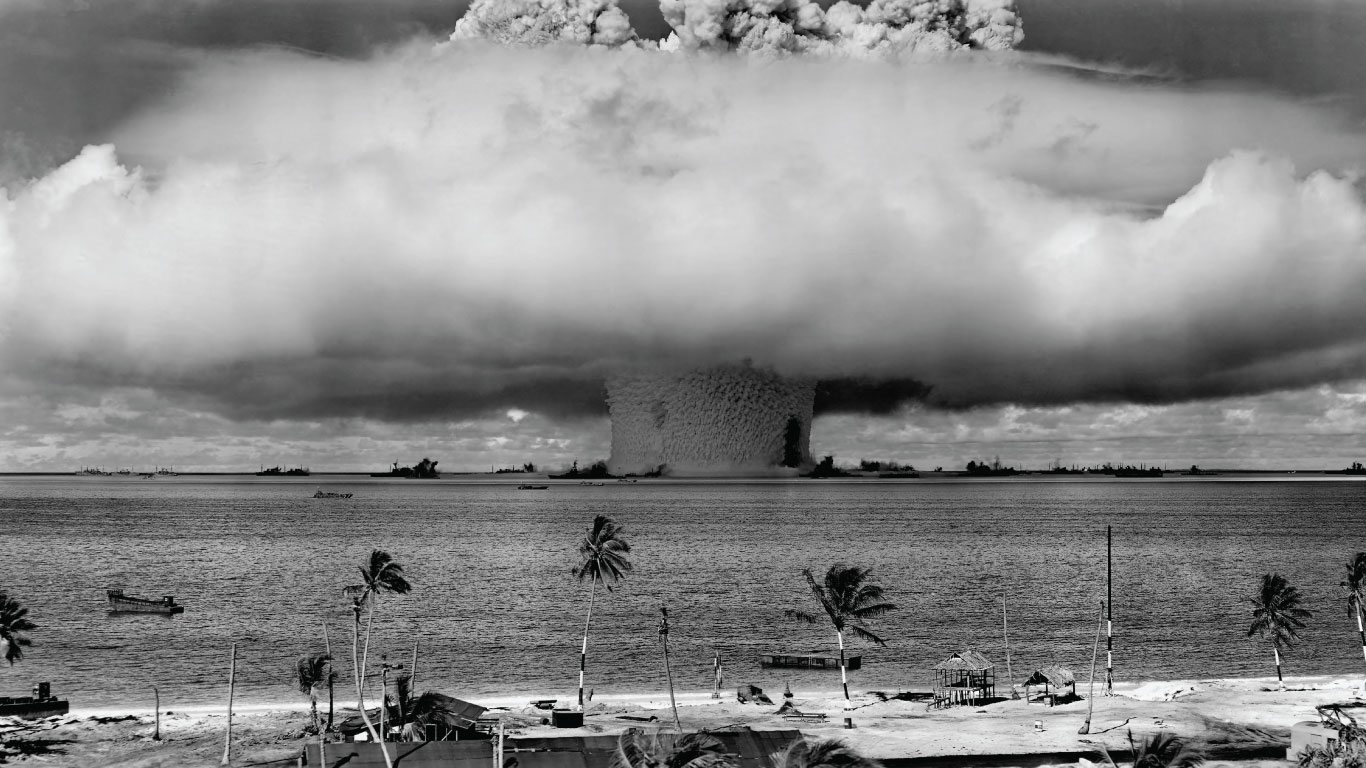
While the chances of such a disaster occurring are quite low, all levels of the government as well as people who work closely with nuclear energy have disaster protocols in place. There is no reason why you shouldn’t be as prepared in the face of a disaster as dangerous as this.
BEFORE
1
Be familiar with your family and neighborhood’s evacuation plans. Go over them until every member of your household is familiar. Have a Bug Out Bag ready in case.
2
Make a list of potential shelters if your community hasn’t already assigned any.
3
Identify a reliable means of being updated on emergency information.
How To Prepare for
a Nuclear
Emergency
DURING
If a large-scale nuclear emergency does take place, you will be contacted by the relevant authorities on what steps to take.
If you are able to reach a shelter
Take cover, try to get below ground and stay there until advised not to.
Limit ventilation with the outdoors. You can do this by sealing windows, doors and vents, and turning off your fans and heating/cooling systems.
Expect to Bug In for at least 24 hours. You may be required to remain in your shelter for a month in extreme circumstances.
If you are unable to reach a shelter immediately
Do not attempt to look at the explosion, you will go blind.
Take cover behind anything heavy/dense, and lie flat. The pressure wave could hit you in less than 30 seconds.
Create a makeshift mask with any cloth you have on you and cover your mouth and nose. Take shelter as soon as possible.
When to Be Worried
Explosions of nuclear weapons and dirty bombs.
Accidents at nuclear power plants and transportation involving radiation.
Occupational (overexposure at healthcare facilities).
AFTER
Decontamination is an important part of the survival process. Get rid of as much nuclear fallout on yourself as you can.
Clean up! - Take a shower with lots of shampoo, soap and water, avoid scrubbing or using conditioner. Use a clean wet cloth to blow your nose and wipe your ears, eyelids and eyelashes
Remove clothing, place in a sealed plastic bag and keep it far away from people and animals.
Be gentle! Use a clean wet cloth to clean yourself if you do not have access to a shower.